Maintaining the safety and stability of non-sterile formulations has always been one of the main concerns of industry manufacturers. In this regard, microbial contamination in cosmetic and personal care products is a serious and critical challenge that can directly affect the final quality and consumer health and damage brand reputation. Since the purity and quality of chemical raw materials play a key role in controlling microbial load and preventing premature product spoilage, careful monitoring of the supply chain is inevitable. In this article, we examine in detail the causes and factors responsible for this contamination and then present specialized and operational solutions to address this challenge and ensure product safety.

Microbial Contamination in Cosmetic and Detergent Products
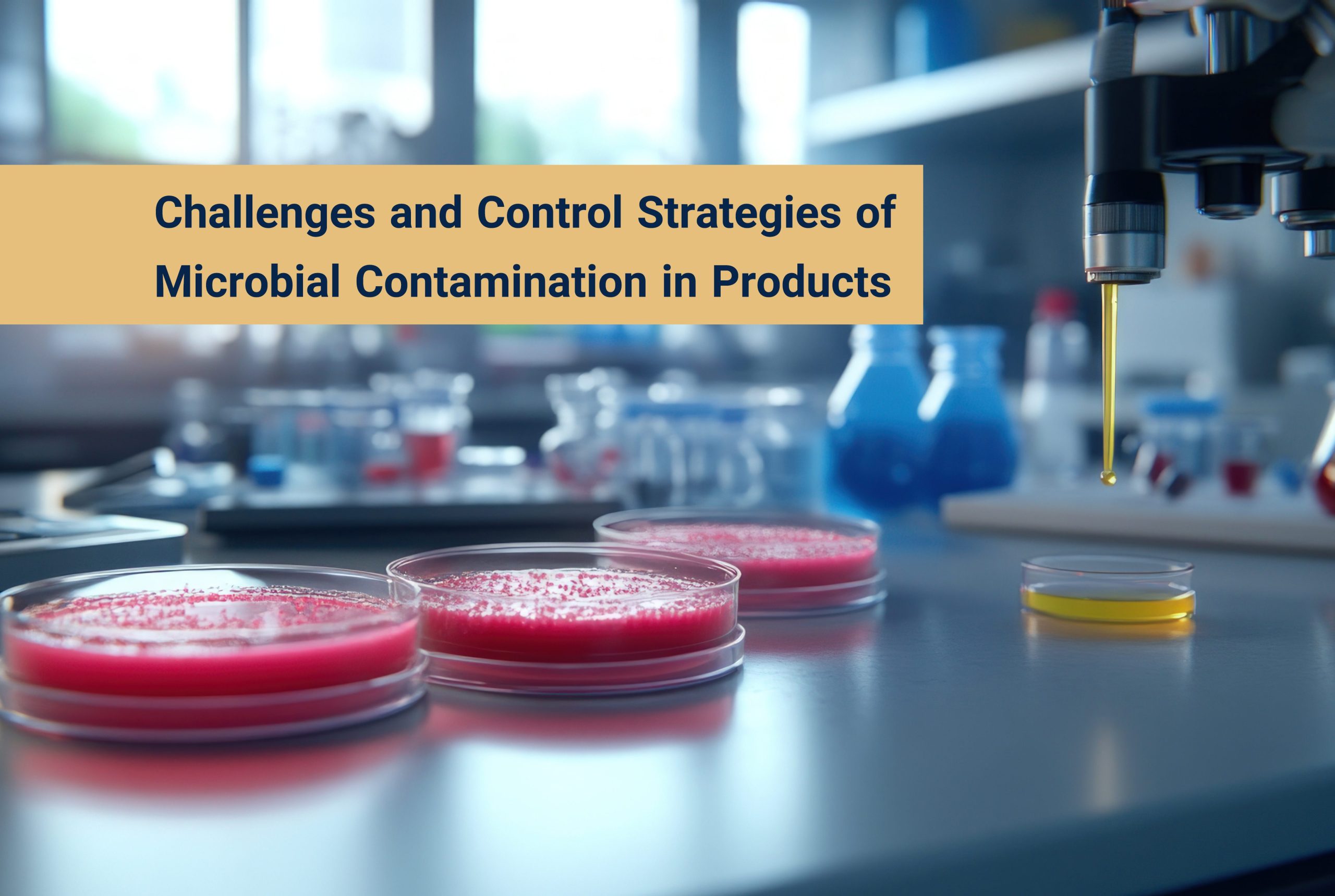
Microbial contamination can occur at any stage of the product life cycle, from the supply of raw materials and the production process to packaging, transportation, and even during use by the consumer. Field studies have shown that a significant percentage of cosmetic and personal care products are exposed to contamination under actual conditions of use. In this regard, the presence of an effective preservative system, along with regular microbial monitoring and control, plays a key role in reducing these risks and maintaining product quality and safety.
Read More: Influential Trends in Cosmetic and Personal Care Raw Materials in the Next 25 Years
1– Poor-Quality Raw Materials:
The quality of raw materials has a direct and significant impact on the microbial load and safety of non-sterile products, as raw materials with a high microbial load can act as an initial source of microorganisms entering the product and make contamination control more difficult. Scientific studies have shown that even non-sterile pharmaceutical raw materials should comply with the microbial limits defined in pharmacopoeias (Pharmacopoeia). In some studies, natural compounds such as plant extracts have had a higher microbial load than purified materials due to contact with the growth environment and aqueous processing and require careful monitoring and control. Therefore, selecting raw materials with a low microbial load and conducting microbial control tests before production are essential elements of ensuring the quality and safety of pharmaceutical, cosmetic, and other non-sterile products.
2– Contaminated Water and Production Environment:
Water is recognized as one of the most important carriers of microorganisms in the production process, as it is extensively used in the production of pharmaceutical, cosmetic, and detergent products. The use of contaminated water can increase the microbial load and even make preservative systems ineffective. The production environment can also be a direct or indirect source of contamination, especially if equipment is not properly cleaned and disinfected.
Consequences of Microbial Contamination
Microbial contamination can have many consequences for manufacturers and consumers. In cosmetic products, this problem can cause skin irritation, inflammation, eye infections, or, in severe cases, lead to product recalls from the market.
For this reason, recognized standards and guidelines such as ISO 17516 have established specific limits for the total count of microorganisms and the absence of certain pathogens (Pathogen) in cosmetic products to ensure consumer safety.
Role of Preservatives in Controlling Microbial Contamination in Products:
Non-sterile products such as creams, lotions, solutions, and topical medicines, due to their water content and organic compounds, provide a suitable environment for the growth and reproduction of microorganisms.
Effective preservatives are a fundamental pillar in combating microbial contamination in non-sterile formulations. Without a suitable preservative system, the product may rapidly become contaminated with microorganisms and develop problems. Preservative Efficacy Tests are conducted to ensure the ability of the preservative system to inhibit microbial growth, which is particularly important in the product manufacturing process. However, different microorganisms may show different levels of resistance to preservatives, which may pose challenges to preservative efficacy testing.

Reducing the Risk of Microbial Contamination in the Detergent Industry:
Although many detergents are naturally less susceptible to microbial contamination due to the presence of surfactants and an unsuitable pH for microorganism growth, products containing significant amounts of water, natural extracts, or specific additives can still be exposed to microbial contamination.
– Microbial Quality Control at All Stages of the Supply Chain:
Selecting raw material suppliers with proven quality control systems and regularly validating raw materials can reduce the initial microbial load.
– Regular Microbial Testing:
Conducting microbial tests at different stages of the production process and before market release enables the timely identification of potential microbial growth and the implementation of necessary corrective actions.
– Designing a Resistant Formulation:
Designing a formulation with a pH unsuitable for microorganisms and selecting appropriate preservatives can contribute to the microbial stability of the product.
Why Is “Padideh Shimi Jam” a Reliable Partner for Manufacturers?
Padideh Shimi Jam, a chemical raw material manufacturer, has redefined raw material supply standards by understanding the sensitivities of the pharmaceutical and cosmetic industries.
Advantages of Working with Us:
Production of Raw Materials Under GMP Conditions: All processes are designed in accordance with Good Manufacturing Practice principles.
Clean Room and Pharmaceutical Certificate: By establishing a clean room and obtaining a pharmaceutical GMP certificate in 1403, we provide you with a standard beyond ordinary raw materials.
Precise Laboratory Tests: No material leaves our warehouse without passing rigorous microbial tests.
Are you looking for safe and stable raw materials for your products? Contact our technical experts now at 02188580000.