
In the beauty and skincare industry, the quality of cosmetic products is directly dependent on the type and composition of their raw materials. Cosmetic raw materials are the foundation of formulations used daily for skin, hair, and body care.
Accurate knowledge of the ingredients used in these products not only contributes to a more informed choice but also plays a crucial role in maintaining public health and product efficacy. Ingredients such as emulsifiers, humectants, emollients, active ingredients, antioxidants, preservatives, colorants, fragrances, and skin-nourishing agents are among the most important raw materials used in cosmetic formulations.
Selecting high-quality and standard ingredients guarantees the production of effective, safe, and high-performance products that enhance the daily health and beauty of consumers.
The main characteristics of cosmetic industry raw materials include compatibility with skin and hair, desired efficacy, chemical stability, compatibility with other formulation components, and acceptable microbial quality. Utilizing cosmetic-grade raw materials ensures that the final product is free from allergenic contamination and suitable for daily use. Padideh Shimi Jam Knowledge-Based Company is one of the reputable chemical raw materials manufacturers for producers, including cosmetic raw materials and detergent raw materials, in the best quality, in compliance with international standards in Iran.
Cosmetic industry raw materials include various types. The most important categories of chemical raw materials are presented in the infographic below.
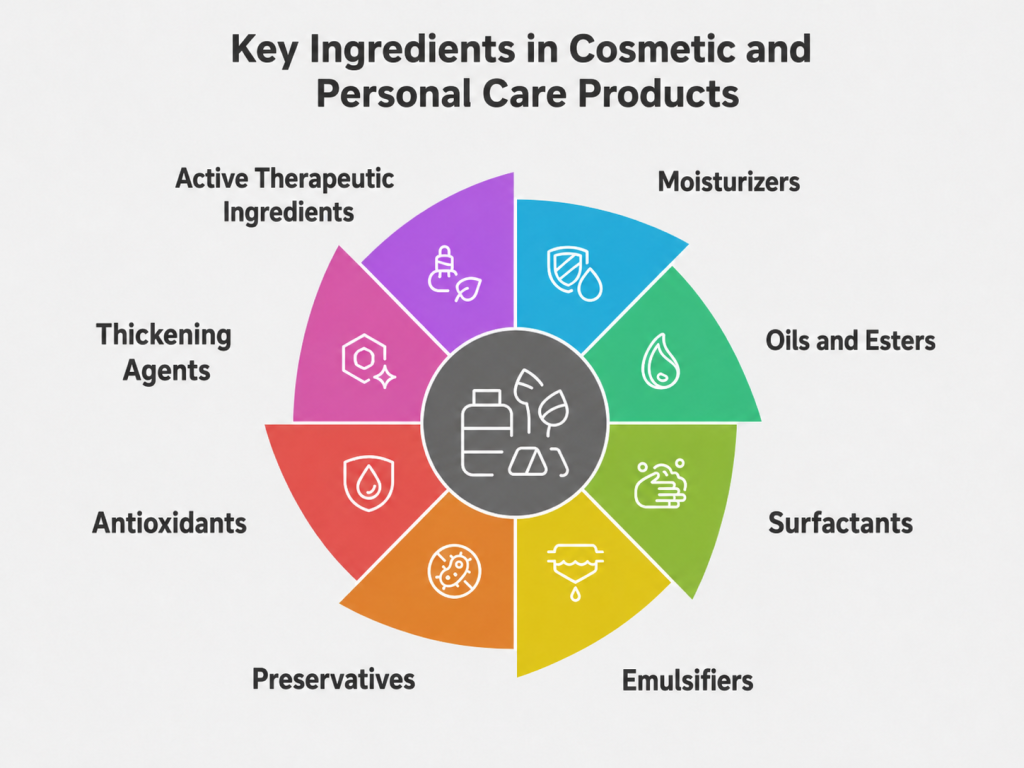
Due to their need for significant volumes of cosmetic ingredients, cosmetic product manufacturers are constantly seeking bulk purchases of cosmetic industry raw materials with stable quality and competitive pricing. Bulk purchasing from a domestic manufacturer like Padideh Shimi Jam offers the advantage of reducing costs while providing services such as technical consultation, specialized analysis, logistical support, and the possibility of sampling before the final order.
When selecting raw materials for cosmetic products, especially in professional formulation, the following factors must be considered:
Among the most common cosmetic industry raw materials in manufacturing cosmetics, the following can be highlighted:
The price of cosmetic raw materials varies depending on several factors, including:
In the Iranian market, direct cooperation with a chemical raw materials manufacturer like Padideh Shimi Jam leads to the elimination of intermediaries, reduction of price fluctuations, and receipt of specialized technical services. To inquire about the price of cosmetic raw materials, you can contact the experts of Padideh Shimi Jam at +982188580000.
Purchasing cosmetic raw materials domestically and locally carries significant importance due to the following reasons:
Consequently, purchasing chemical raw materials from domestic manufacturers is a strategic choice for developing Iranian brands relying on local knowledge and international quality. Please register your order to purchase cosmetic chemical raw materials.
Padideh Shimi Jam Knowledge-Based Company is one of the chemical raw materials manufacturers in Iran. This company is a center for the production and sale of cosmetic raw materials. To purchase raw materials, you can contact the experts of this organization at +982188580000.
Frequently Asked Questions:
1. What compounds are included in cosmetic chemical raw materials?
Cosmetic raw materials comprise a wide range of cosmetic-grade chemical compounds used in the production of beauty and personal care products. These compounds include surfactants, emulsifiers, humectants (such as glycerin and propylene glycol), preservatives (like parabens), mineral and vegetable oils, vitamins, antioxidants, and active ingredients such as niacinamide or hyaluronic acid.
2. What characteristics are important when selecting cosmetic raw materials?
High quality and appropriate purity, compliance with health standards, chemical stability in the final formulation, compatibility with skin and eyes, and the ability to blend with other formulation components are among the most critical criteria for selecting cosmetic raw materials. Furthermore, the cosmetic grade must be approved for safety by regulatory organizations.
3. Are technical analysis and quality certificates (COA/MSDS) mandatory for cosmetic raw materials? Why?
Yes, all chemical raw materials, especially those used in cosmetic products, must have a Certificate of Analysis (COA) and a Material Safety Data Sheet (MSDS). These documents indicate the purity of the substance, physical and chemical properties, storage conditions, potential hazards, and safety instructions for handling the material. The availability of these documents is a prerequisite for obtaining legal production licenses from the Food and Drug Administration and ensuring the manufacture of high-quality products.