

The term Oleochemical is derived from the Latin word oleum, meaning “olive oil.” However, like many terms inherited from Latin, this term is somewhat misleading and does not fully reflect the nature of the products it describes.
Although olive oil is used in the production of some oleochemical products, the sources of this group of materials are not limited to various plants and also include fats and oils of animal origin.
Fats and oils obtained from plant and animal sources, as natural and renewable resources, are considered suitable alternatives to petroleum-derived oils. Markets such as detergents, adhesives, lubricants, paints, and coatings can use oleochemicals as direct alternatives to petroleum-based raw materials. In addition, because oleochemicals are readily biodegradable in the environment, they are more environmentally compatible compared with petrochemical raw materials.
The Role of Palm Oil and Palm Kernel Oil in the Production of Detergents
The fruit and flesh of the palm tree produce palm oil through extraction processes, while palm kernel oil is refined from its inner seed.
Palm kernel oil contains 85% saturated fat. This oil is used as one of the detergent raw materials in the production of soaps, detergents, and lotions, as well as in processed foods such as various candies and cheese products. Malaysia and Indonesia are currently the world’s largest producers of palm oil. In fact, palm oil production per unit of land area is high compared with other vegetable oils; therefore, it is generally considered one of the less expensive vegetable oils.
Padideh Shimi Jam produces Palm Kernel Fatty Acid Diethanol Amide under the trade name IRAMID PKD as an alkanolamide.

Applications of Rapeseed Oil in Industry
Rapeseed, which was used as a Lubricant for Steam Engines in the nineteenth century, has now become one of the major sources of raw materials for animal feed. Other applications include its use as a raw material in industrial lubricants, candles, lipsticks, and newspaper ink. It is also one of the most common ingredients in vegetable oils used for cooking.
Canada is one of the major producers of rapeseed and produced approximately 19 million tons of this crop in 2022. This figure represented an increase of more than one-third compared with the previous year’s production, which was affected by drought.
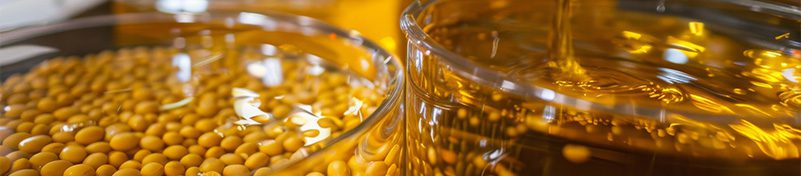
Soybean Oil and the Production of Biodegradable Surfactants
Soybean Oil is widely used in the production of personal care products and cosmetics and is considered one of the main ingredients in massage oils and moisturizers for the skin and hair.
In recent years, soybean consumption patterns have changed. In the United States, soybean oil extracted from crushed soybeans has become one of the major raw materials for the production of biodiesel and renewable diesel. With the continued expansion of the renewable fuels industry, the soybean oil market in non-fuel sectors is expected to face fluctuations in price and supply. Padideh Shimi Jam, by producing Soyamid Fatty Acid Diethanol Amide or IRAMID VD, known in the market as Soyamid, has taken an effective step toward the use of this biodegradable and environmentally friendly material.
Coconut Oil; The Main Basis for the Production of Personal Care Products
In the Philippines, the coconut tree, scientifically known as Cocos nucifera, is mainly called the “tree of life” because of its diverse applications. In fact, various parts of this tree are used in industries such as textiles and construction throughout the island.
Beyond its applications in food products, detergents, soaps, and personal care products, Coconut Oil is also used in the production of methyl esters, fatty acids, and fatty alcohols. It is estimated that the oil yield from 1,000 coconuts is approximately 110 kilograms. The Philippines, Indonesia, and Malaysia are major producers of coconut oil. Like other oils obtained from natural resources, Coconut Oil is also used as a raw material for biodiesel production.
Padideh Shimi Jam, a chemical raw material manufacturer, produces the following basic and specialized products using Coconut Oil:
-
Coconut Fatty Acid Diethanol Amide (IRAMID CD)
-
Coconut Fatty Acid Monoethanolamide (IRAMID CM)
-
Cocamidopropyl Betaine (AMPHONIL CF+)
-
Cocamidopropyl Hydroxysultaine (AMPHONIL CAS)
-
Cocamidopropyl Dimethylamine Oxide (OXONIL CAC)

Oleochemicals and Future Perspectives on Sustainable Raw Material Supply
With the growing focus on green chemistry and sustainability, as well as in response to challenges such as climate change and the depletion of fossil resources, oleochemical raw materials have received increasing attention. The inherent value of these compounds lies not only in their natural origin but also in unique characteristics such as biodegradability, lower toxicity, and a reduced carbon footprint compared with fossil-derived products.
Today, we are witnessing the emergence of environmentally friendly plastics and surfactants produced using oleochemical materials. However, these materials may face shortages under certain conditions and in certain environments. Their attractiveness to biodiesel producers is also one of the factors affecting supply levels. In addition, European Union regulations concerning deforestation could disrupt the palm oil industry, which is one of the main pillars of the oleochemical market.
Source: