Laboratories are essential for conducting experiments, research, and analysis in various fields, such as chemistry, biology, physics, and engineering. However, working in a laboratory also involves a wide range of chemical, biological, physical, and radiation hazards that could cause harm to laboratory personnel, the environment, and even the public.
To ensure a safe laboratory environment, it is crucial to understand the potential hazards and take appropriate safety measures. This blog will discuss the various laboratory hazards and safety controls that should be implemented to minimize the risks associated with laboratory work. We will cover essential safety practices, such as wearing personal protective equipment, proper handling and storage of chemicals, and emergency procedures.
Hazards in the laboratory fall into three general categories:
- Laboratory Hazards Related To Equipment
Laboratory equipment is an essential component of scientific research and experimentation. Still, it also poses certain hazards that should be recognized and addressed to ensure laboratory personnel’s and the environment’s safety. Some of the hazards associated with laboratory equipment include:
- Electrical Hazards: Many laboratory instruments, such as centrifuges, microscopes, and spectrophotometers, require electrical power to operate, posing a risk of electrical shock. Ensure equipment is properly grounded and avoid using damaged or frayed electrical cords.
- Chemical Hazards: Laboratory equipment is often used with hazardous chemicals, which can react with the materials used in the equipment, leading to corrosion or explosion. Always check the chemical compatibility of equipment before use and follow proper handling procedures for hazardous materials.
- Thermal Hazards: Laboratory equipment such as ovens, furnaces, and autoclaves operate at high temperatures, which can cause burns or fires. Always use proper protective equipment, such as gloves and lab coats, and follow the manufacturer’s guidelines for safe operation.
- Mechanical Hazards: Laboratory equipment such as glassware and pipettes can break or shatter, leading to cuts or punctures. Always handle equipment carefully and dispose of broken glassware properly.
- Radiation Hazards: Some laboratory equipment, such as X-ray machines, produce ionizing radiation, which can cause harm to personnel and the environment. Always follow proper safety protocols for the use and disposal of radioactive materials.
- Biological Hazards:
- Pathogenic Microorganisms: Working with bacteria, viruses, fungi, or parasites can expose individuals to infectious agents capable of causing diseases.
- Allergens and Toxins: Biological specimens may contain allergens or toxins that can trigger allergic reactions or toxic responses.
- Genetically Modified Organisms (GMOs): Handling GMOs requires careful consideration to prevent unintended release into the environment and potential ecological impacts.
To ensure the safe use of laboratory equipment, it is important to receive proper training and follow established safety protocols. Always read and understand the manufacturer’s instructions for safe equipment operation, and never hesitate to ask for assistance or clarification if you are unsure how to use equipment properly.
- Laboratory Hazards Related To Gases
Laboratories often utilize various compressed gases for numerous applications, including calibration, sample preparation, and as reaction agents. Understanding the potential hazards associated with these gases and following safety guidelines to minimize risks is crucial. Some common hazards associated with gases used in laboratories include:
- Toxicity: Some gases, such as hydrogen sulfide, carbon monoxide, and chlorine, can be toxic when inhaled or come into contact with the skin. Prolonged exposure to these gases may result in severe health issues or even death.
- Corrosiveness: Corrosive gases, like hydrogen chloride, ammonia, and sulfur dioxide, can cause severe damage to human tissues, laboratory equipment, and the surrounding environment. These gases can lead to chemical burns, respiratory issues, and material degradation.
- Flammability: Flammable gases, such as hydrogen, methane, and acetylene, can ignite in the presence of an ignition source, causing fires or explosions. These gases pose significant risks when not stored, handled, and used appropriately.
- Explosiveness: Some gases, like oxygen and nitrous oxide, can react violently when combined with other substances or exposed to heat, leading to explosions. Proper containment and separation of reactive gases are essential to minimize the risk of explosion.
To mitigate these hazards, laboratories should implement the following safety measures:
- Proper equipment: Utilize gas cylinders with appropriate regulators, valves, and fittings. Ensure all equipment is compatible with the specific gas used and regularly inspected for leaks or damage.
- Confinement and ventilation: Store and use gases in well-ventilated areas, preferably under a fume hood or within a designated gas storage cabinet. This helps to prevent the buildup of hazardous gas concentrations in the laboratory.
- Safety valves: Use pressure relief devices and safety valves on gas cylinders and systems to prevent over-pressurization and potential explosions.
- Procedural controls: Develop and implement standard operating procedures for safely handling, storing, and using gases. Train all personnel working with compressed gases and ensure they understand the risks and appropriate safety measures.
- Gas detection and monitoring: Install gas detectors and alarms where hazardous gases are used or stored. Regularly monitor gas concentrations to ensure that they remain within safe limits.
- Personal protective equipment (PPE): Ensure that laboratory personnel wear appropriate PPE, such as safety goggles, gloves, and lab coats, when handling or working near compressed gases.
- Emergency preparedness: Develop and maintain emergency response plans, including evacuation procedures and first aid measures, in case of gas leaks, fires, or explosions. Regularly conduct drills and training to ensure all personnel know these plans.
By following these safety guidelines, laboratories can minimize the hazards associated with compressed gases, ensuring a safe working environment for all personnel.
- Laboratory Hazards Related To Chemicals
Chemicals in laboratories pose significant hazards to laboratory workers and require careful handling and management to prevent accidents and injuries. Acids, bases, etching solutions, and solvents are commonly used in materials chemistry and device fabrication. They can cause severe burns, tissue damage, organ damage, asphyxiation, and genetic damage if used improperly.
Some of the hazards associated with chemicals in labs include:
- Chemical burns: Chemicals can cause severe burns on contact with skin, eyes, or mucous membranes.
- Toxic fumes: Some chemicals can emit toxic fumes that can be harmful if inhaled, leading to respiratory problems or even death.
- Fire and explosion: Many chemicals are flammable and can cause fires or explosions if they come into contact with a spark, heat source, or incompatible substances.
- Corrosion: Some chemicals can corrode materials, such as metals or plastics, leading to structural damage or failure.
- Chemical spills: Spills of chemicals can lead to contamination of the environment and pose a danger to those in the area.
- Reactive hazards: Some chemicals are reactive and can react violently with other substances, leading to explosions or fires.
To prevent accidents and injuries, laboratory workers must take chemical safety instructions before using any chemical. This includes learning about the hazards associated with each chemical, handling and storing them safely, and responding during an accident or spill. Workers must also be trained to properly use personal protective equipment (PPE), such as gloves, goggles, and respirators, to minimize the risk of exposure to hazardous chemicals.
Filling out a COSHH (Control of Substances Hazardous to Health) form is essential to chemical safety in laboratories. This form requires the identification of hazardous substances used in the laboratory and outlines the steps that must be taken to control exposure to those substances. It provides an opportunity to learn about the hazards associated with each chemical, its safety implications, and how to handle and use it safely.
Overall, chemical safety in laboratories is a critical issue that requires careful attention and management. By taking appropriate precautions and following proper procedures, laboratory workers can minimize the risk of accidents and injuries associated with hazardous chemicals.
Lab Safety Rules and Guidelines
Laboratory hazards can pose significant risks to the health and safety of individuals working in the laboratory and the environment. It is crucial to take appropriate safety measures to prevent accidents and injuries. Here are some general laboratory hazard safety measures that can be implemented:
- General Safety Awareness
- Familiarize yourself with all aspects of safety before using any equipment.
- Be alert to unsafe conditions of the equipment, procedures, and actions, and call attention to them so that corrections can be made as soon as possible.
- Label all storage areas appropriately, and keep all chemicals in properly labelled containers.
- Date all chemical bottles when received and when opened.
- Note expiry dates on chemicals.
- Note storage conditions and adhere to them.
- Familiarize yourself with the appropriate protective measures when exposed to the following classes of hazardous materials.
- Flammable – Corrosive – Toxic – Carcinogen – Compressed Gases – Poisons
- Segregate chemicals by compatibility groups for storage.
- Post warning signs for unusual hazards such as flammable materials, no naked flames, or other special problems.
- Pour more concentrated solutions into less concentrated solutions to avoid violent reactions.
- Avoid distracting another worker.
- Use equipment only for its designated purpose.
- Position and secure apparatus used for chemical reactions to permit manipulation without moving the apparatus until the entire reaction is complete.
- Personal Safety
- Always use extracted wet benches for chemical work.
- Always wear safety glasses or goggles at all times in the laboratory.
- Always wear a laboratory coat/apron in the laboratory.
- Appropriate gloves should be worn as needed.
- Appropriate shoes should be worn in the laboratory.
- Wear a breathing mask as and when appropriate.
- Only trained personnel may use breathing apparatus.
- Personal Hygiene
- Wash hands before leaving the laboratory.
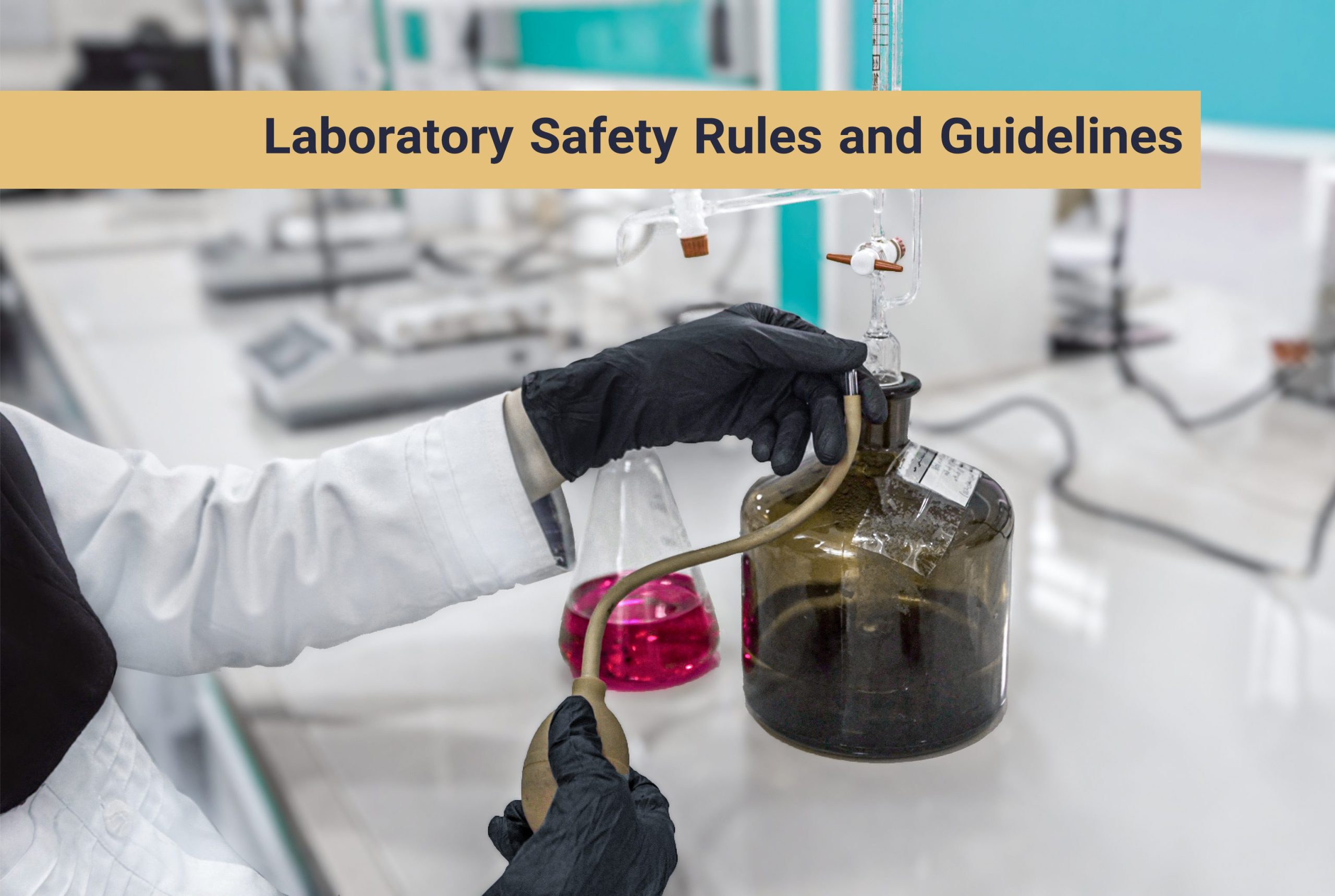
- Never mouth-suck anything in a pipette in the laboratory.
- No food or drink is allowed in laboratories or areas where chemicals are used or stored.
- No food should be stored in a laboratory refrigerator.
- Never eat or drink from the laboratory glassware.
- Keep exposed skin covered in the laboratory.
- Fire Prevention
- Be aware of ignition sources in the laboratory and service areas (open flames, heat, electrical equipment).
- Purchase chemicals in quantities that will be used in not distant future.
- Always store flammable liquids in appropriate cabinets.
- Do not store incompatible reagents (e.g., acids with organic solvents).
- As explosive peroxides could form, do not store ether or similar chemicals for extended periods.
- Date chemicals when received and opened.
- Ensure all electrical cords are in good condition and all electrical outlets are earthed.
- Remain out of a fire or incident area if you are not in a position to help.
- Familiarize yourself with siting and condition of fire extinguishers. Broken seals mean a fire extinguisher has been used and needs to be recharged.
- Do not use fire extinguishers unless you are trained and feel confident.
- Housekeeping
- Eliminate safety hazards by maintaining the laboratory work areas in a good state of order.
- Maintain clear passages to the laboratory exit.
- Remove unnecessary material from bench tops, and extract wet benches, floors and aisles.
- Wipe down bench tops and other laboratory surfaces after each use.
- All equipment should be inspected before use.
- If experiments must be left unattended, place a note next to the experimental apparatus indicating the chemicals involved and possible hazards, your name, and a number to reach you in an emergency.
- Keep the laboratory floor dry at all times. Attend to spills immediately and notify other lab workers of potential slipping hazards.
- Only authorized personnel should do maintenance work on laboratory equipment.
- Sink traps should be flushed with water regularly to prevent the release of chemical odours in the laboratory.
- All compressed gas cylinders should be securely chained or clamped to a rack.
- Take empty cylinders to the empty cylinder bay for collection. Unnecessary delays accumulate rent that is usually much more than the gas price.
- Emergency Procedures
- Emergency procedures in a laboratory are essential to ensure the safety of everyone present and to minimize damage in the event of an emergency. These procedures should be established in advance and communicated clearly to all workers in the laboratory.
- Here are some basic emergency procedures that should be followed in a laboratory:
- Alert everyone in the laboratory: In an emergency, it’s important to alert everyone immediately. This could involve activating an alarm, calling out an alert, or using a communication system.
- Evacuate the area: If the situation warrants it, evacuate the laboratory as quickly and safely as possible. Follow established evacuation routes and procedures, and assist anyone needing help.
- Contact emergency services: If there is a fire, explosion, chemical spill, or another emergency that requires immediate attention, contact emergency services such as the fire department, paramedics, or police.
- Shut off equipment: If the emergency involves hazardous materials or equipment, shut off any equipment or processes that could contribute to the emergency.
- Use safety equipment: If necessary, use safety equipment such as fire extinguishers, eye wash stations, or safety showers to prevent further damage or injury.
- Follow established protocols: In an emergency, it’s important to follow them. This could involve using specific equipment, wearing protective gear, or following evacuation routes.
- By establishing clear emergency procedures in a laboratory and ensuring that all workers are trained in these procedures, laboratory managers can help minimize the risk of accidents and protect the health and safety of everyone in the laboratory.
- Personal Protective Equipment
Personal protective equipment (PPE) is essential for laboratory workers to protect themselves from hazards such as chemical spills, biological contamination, and physical injury. The type of PPE required will depend on the work’s nature and the hazards involved.
Here are some common types of PPE used in laboratories:
- Eye Protection
Laboratories are environments where various chemicals and materials are handled daily. There is always a risk of splashing or flying objects that could cause serious injuries, particularly to the eyes. Therefore, wearing appropriate eye protection while working in a laboratory is essential.
Several types of eye protection are available in a laboratory setting, including safety glasses, goggles, and safety visors. Each option provides different protection levels depending on the task at hand. Safety glasses are a type of eyewear that covers the eyes and the surrounding areas. They are often used for general-purpose applications and provide some protection against small airborne particles and liquid splashes.
Goggles, on the other hand, offer more extensive protection than safety glasses since they enclose the entire eye area. They are ideal for tasks that involve exposure to chemicals, liquids, or gases and also provide protection from flying debris. Safety visors are another type of protective eyewear covering the entire face and protecting the front and sides against liquid splashes, dust, and other hazards.
When selecting the appropriate eye protection, it is important to consider the specific tasks being performed in the laboratory. For instance, if you are working with hazardous chemicals that can cause severe eye damage, goggles or safety visors are recommended since they provide a higher level of protection than safety glasses. However, safety glasses may be sufficient if you work with less hazardous chemicals or perform routine lab tasks that do not involve significant risks.
- Laboratory Coat
A laboratory coat, also known as a lab coat or white coat, is an essential protective clothing in a laboratory setting, particularly in a chemistry laboratory where chemicals are frequently used. It protects the wearer’s clothing and skin from accidental spills, splashes, or sprays of hazardous materials.
The typical laboratory coat is made of durable and fire-resistant fabric such as cotton, polyester, or a combination of both. It is often white in colour to signify cleanliness and purity. It features long sleeves, a buttoned front, and a collar to fully cover the wearer’s body.
Wearing a laboratory coat is crucial in ensuring laboratory safety. It helps to prevent skin and clothing contamination and reduces the risk of exposure to harmful substances. It also serves as a barrier between the wearer and the chemicals, protecting the skin from corrosive or irritating substances.
When selecting a laboratory coat, choosing one that fits well, covers the entire body, and is comfortable to wear is essential. Following proper care and maintenance procedures is essential to ensure the coat remains clean and in good condition.
- Aprons
In addition to lab coats, aprons are another type of protective clothing commonly used in laboratory settings. They are designed to protect the wearer against corrosive or irritating chemicals.
Aprons are typically made of plastic or rubber and are available in various styles and sizes to fit different body types. They are designed to be worn over garments that cover the arms and body, such as a laboratory coat, and provide protection to the front of the body.
When wearing an apron, it is important to ensure it is properly secured and covers the entire front of the body to prevent exposure to hazardous chemicals. Following proper care and maintenance procedures is essential to ensure the apron remains clean and in good condition.
As with all protective clothing, keeping aprons in good condition is important by cleaning, repairing, or replacing them when necessary. Dirty or damaged protective clothing can pose a hazard to the wearer by increasing the risk of chemical exposure or accidents.
- Hand Protection
Hand protection is critical to laboratory safety, particularly when handling hazardous materials such as chemicals. Protective gloves are the most common type of hand protection used in laboratory settings and are designed to provide a barrier between the skin and the chemicals being handled.
Different gloves are available in the laboratory, including latex, nitrile, vinyl, and rubber gloves. Each type of glove provides varying levels of protection against chemical exposure. Selecting the appropriate glove based on the material being handled and the specific hazards involved is essential.
- Respirators
Respirators are another type of personal protective equipment (PPE) commonly used in laboratory settings to protect against inhalation of hazardous materials, such as dust, fumes, and vapours. They are particularly necessary when working with chemicals that have the potential to cause respiratory problems or damage, such as aerosols or gases.
Conclusion
Laboratory hazards can pose significant risks to the health and safety of laboratory personnel. These hazards can include exposure to chemicals, fire, explosions, electrical hazards, and many others. However, by implementing appropriate safety controls and utilizing personal protective equipment, laboratory personnel can work safely and minimize the risk of accidents or injuries.
References: