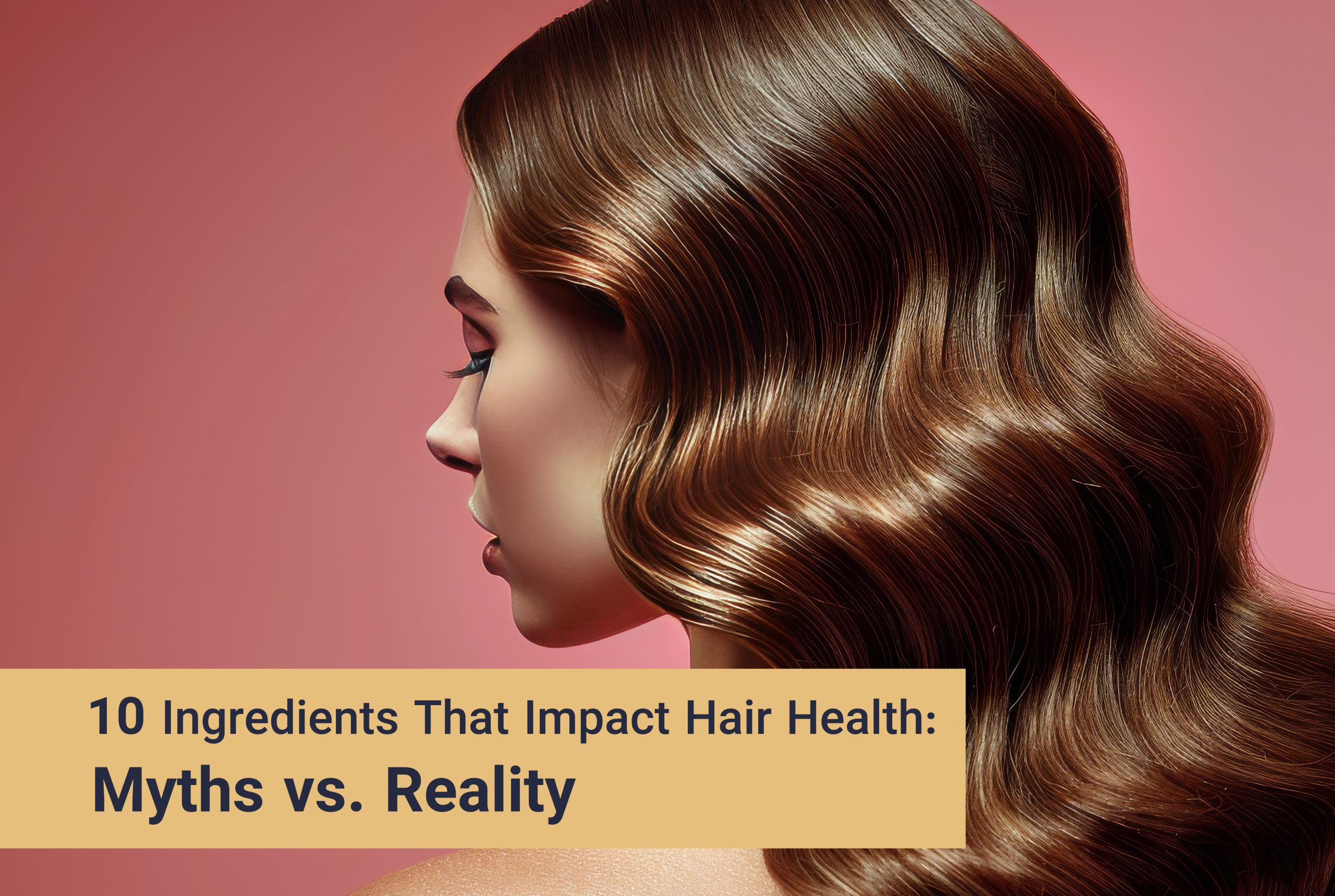
In the hair care products industry, we see various claims regarding the chemical raw materials that make up these products. For chemists and cosmetic and personal care formulation specialists, evaluating the validity of these claims is essential so that they can produce effective products based on scientific evidence. In this article, we examine some of the most common claims made about ingredients that affect hair health.
1 – Para-Phenylenediamine or P-Phenylenediamine
 Claim: Para-phenylenediamine (PPD) is considered one of the most common and strongest allergens in permanent hair dyes and is used more commonly in dark-colored dyes. This ingredient can cause severe allergic reactions, skin irritation, and eye inflammation. In addition, there are concerns about its possible association with the development of cancer.
 Fact: After use, most of the ingredient that has not been absorbed by the hair is washed away. A patch test (skin sensitivity test) for PPD is recommended to reduce allergic reactions. In addition, exposure time to PPD in Oxidative Hair Dye systems is generally limited to 15 to 45 minutes per application.
The presence of an Allergen does not mean that the ingredient is generally unsafe; rather, it means that it is unsafe for a specific group of people who develop sensitivity. According to experts, key regulatory bodies, including those in the European Union (where ingredient evaluation is stricter than in the United States), permit the use of PPD at controlled levels because its overall risk is well understood and manageable. Modern formulations also use controlled concentrations, stabilizers, and antioxidant systems to minimize the risk of sensitization.
2– Ammonia (Ammonium Hydroxide)
Claim: Ammonia is used to open the Hair Cuticle so that the color can penetrate the hair shaft; it creates a strong and pungent odor that can irritate the eyes, nose, and respiratory system; it can also irritate the scalp and, over time, make the hair dry, brittle, and damaged.
Fact: Ammonia is used in permanent hair dyes to swell the hair fiber and allow dye molecules and Hydrogen Peroxide to effectively penetrate the hair shaft and react there. This process makes hair color change possible in less than 45 minutes. Exposure of the hair and scalp to this ingredient is low due to its volatility and washability. Experts discussing hair damage state that, in practice, ammonia-containing formulations can cause less damage compared with ammonia-free alternatives because they are washed out more effectively and do not remain in the hair. What often creates a negative perception of ammonia is its unpleasant odor; however, it is one of the most efficient and predictable alkalizing agents.
3 – Parabens
Claim:Parabens (such as propylparaben, butylparaben, and others) are used as preservatives to prevent the growth of microorganisms; these compounds can mimic the activity of the estrogen hormone and are suspected endocrine disruptors that may be associated with fertility problems and cancer.
Fact: Parabens are now rarely used in hair care formulations because more advanced preservative systems provide sufficient protection in most formulations.
These compounds are among the most extensively studied types of preservatives in cosmetic and personal care products, and evidence consistently shows that they are safe at the levels used in these products. Experts state that although parabens can weakly bind to estrogen receptors, their activity is thousands of times lower than that of natural estrogen and is nowhere near a level capable of meaningfully disrupting human physiology.
Regulatory bodies worldwide, including the strictest ones, continue to permit the use of parabens because actual exposure is low, predictable, and well within safety limits. In addition, paraben alternatives may have a higher risk of irritation or sensitization and may reduce consumer safety.
Read more:Hair Care Product Trends
4- Alcohols
Claim: Alcohols can cause hair dryness and lead to brittleness and dehydration.
Fact: Due to regulations controlling volatile organic compounds (VOC), the level of alcohol used in hair care formulations has been significantly reduced. However, experts emphasize the importance of recognizing the two types of alcohol used.
Experts state: “Short-chain alcohols such as ethanol are volatile and are commonly used in hair styling formulations to reduce stickiness and improve drying time. Short-chain alcohol is also used as a carrier to help active ingredients that affect hair health penetrate effectively.
Many hair products use long-chain fatty alcohols (such as cetyl alcohol and stearyl alcohol), which are actually conditioning agents and help make hair soft and smooth. Hair dryness depends on the formulation of the product and is not an inherent characteristic of alcohols.
5 – Sulfates (Sulfates)
Claim: Sulfates, including Sodium Lauryl Sulfate (SLS) and Sodium Lauryl Ether Sulfate (SLES), are strong detergents and surfactants. These ingredients can strip hair color, cause skin and eye irritation, and may worsen conditions such as dermatitis and eczema on the scalp. In addition, damage caused by SLS to the scalp may indirectly affect the health of hair follicles.
Fact: Sulfate surfactants provide very good cleansing performance and are also cost-effective. Sulfate-free formulations are not as efficient as sulfate-containing formulations. These formulations generally require higher surfactant levels and greater effort to manage foam. In addition, final products contain, alongside these surfactants, conditioning agents, polymers, co-surfactants, and regulators that reduce irritancy and improve mildness.
Sodium Lauryl Ether Sulfate (SLES), which is the ethoxylated form of SLS or Sodium Lauryl Sulfate, is significantly milder and is widely used in shampoos. In addition, sulfate-free surfactants are not inherently milder and, in some cases, may even be harsher than sulfates.
Read more:4 Misconceptions About Sodium Lauryl Ether Sulfate (SLES)
6 – Heavy Metals
Claim : Heavy metals are sometimes found as impurities; they are also specifically used in darkening dyes, which have been associated with neurotoxicity and developmental disorders.
Fact: Advances in analytical tools and methods, followed by improvements in manufacturing processes, have resulted in significant progress in reducing heavy metals in cosmetic and personal care raw materials.
Modern regulations strictly control permitted levels, and reputable manufacturers test raw materials to ensure compliance with these standards. Experts emphasize that completely eliminating all traces of heavy metals from these products is neither economically feasible nor practical.
7- Silicones:
Claim: Silicones can accumulate on the hair over time and weigh it down; they also have negative effects on the environment.
Fact: Silicones provide many benefits for hair. They create shine by forming a film on the hair that increases the contrast and specular reflection of light. These ingredients also improve combability/detangling, provide an anti-frizz effect by sealing the hair cuticle, and protect the hair against humidity. In addition, they protect the hair against thermal and mechanical damage during styling.
Regarding the environment, silicones are inert, do not bioaccumulate in organisms, and are permitted by regulatory bodies worldwide. For many consumers, their functional benefits outweigh their perceived disadvantages.
The presence of the word silicones on a product can have a negative effect on consumer perception; Polyquaternium-7 can be recognized and used as an effective alternative. This ingredient can replace silicones in many formulations.
8- Natural Pigments
Claim: Natural pigments can be used as a basis for hair dyes with less chemical aggression and often replace harsher synthetic intermediates such as PPD.
Fact: If someone wants a true and long-lasting color, natural dyes generally do not provide this result. Experts warn that being “natural” does not mean being safer, and many plant-based ingredients contain allergens and have irritation risks. Many consumers use natural pigments as a complementary option rather than a complete replacement for synthetic systems.
9- Moisturizing Oils, Plant-Based Butters, and Humectants:
Claim: Moisturizing oils, plant-based butters, and humectants (such as argan, coconut, and others) help combat dryness and damage caused by the coloring process by moisturizing the hair shaft and soothing the scalp. They also have nourishing properties and make hair shiny and soft.
Fact: These ingredients can lead to formulation stickiness and increased drag. Many natural butters and oils have a shorter Shelf Life and may affect the color of the formulation.
Experts say that these ingredients certainly improve the feel of the hair, but they cannot reverse the structural changes caused by oxidative coloring. Most of the shine and softness they provide results from temporary surface conditioning rather than actual repair, and their performance is not as effective as that of silicones.
These ingredients can interfere with color absorption, reduce color penetration, or weigh the hair down when used excessively.
10 – Perfumes (Perfumes)
Claim: The general term “perfume” can include dozens of chemical compounds, including “phthalates,” which are known as endocrine-disrupting substances and have been associated with hormonal disorders and developmental problems. Fragrances are also considered one of the main causes of allergic reactions and irritation of the skin or respiratory system.
Fact: Today, perfumery has gone beyond simply masking the base odor of a formulation and providing a pleasant fragrance and has become a means of providing a sensory experience. Fragrance can be used to improve mood, enhance a sense of well-being, and mask the odors of pollutants that are absorbed by the hair.
Although fragrance can cause irritation in sensitive individuals, it plays a key role in consumer experience and product acceptance. Modern fragrance design follows strict IFRA (International Fragrance Association) guidelines, and many brands offer fragrance-free options for sensitive individuals.
Table Reviewing Common Beliefs and Facts About Chemicals in Hair Care Products
|
Ingredient Name |
Common Claim and Belief |
|
| P-Phenylenediamine | Causes cancer and severe allergies | Safe when standard exposure time and sensitivity testing are observed, and approved by the European Union. |
| Ammonia | Has a bad odor and damages the hair | It is volatile and does not remain on the hair. It causes less damage than some odorless alternatives. |
| Parabens | Disrupt hormones. | Their hormonal activity is very low and considered safe. Their alternatives may be more sensitizing. |
| Alcohols | Cause hair dryness and brittleness | Fatty alcohols (such as cetyl alcohol) are actually conditioning agents. Hair dryness is related to the overall formulation. |
| Sulfates | Strip hair color and are harsh. | Sulfate-free shampoos are not necessarily milder. |
| Heavy Metals | Are toxic and are present in hair dyes | In modern and standardized raw materials, their levels are strictly controlled and minimal. |
| Silicones | Accumulate on the hair and block its breathing | They provide excellent protection against heat and humidity. |
| Natural Pigments | Are completely safe and replace chemical ingredients | They have low durability, and being plant-based does not mean they cannot cause allergies. |
| Plant Oils | Completely repair the hair structure | They have a temporary surface effect and cannot replace chemical ingredients in coloring performance. |
| Essential Oils and Fragrance | Cause allergies and hormonal problems. | They are produced according to IFRA standards and are essential for the customer’s sensory experience. |
Final Thoughts: Informed Raw Material Selection, the Key to Success in the Market
As you can see from the cases examined above, many of the fears and concerns surrounding chemicals in the hair care industry stem from a lack of complete awareness or marketing claims without scientific support. For a formulation specialist and manufacturer of cosmetic and personal care products, what matters is not the “name” of a chemical ingredient, but its purity, quality, and usage level.
The reality is that ingredients such as parabens, sulfates, and silicones have been subjected to the strictest safety testing for years and, when sourced from reputable suppliers, play a key role in effectiveness and end-consumer satisfaction. Eliminating these ingredients without reason can sometimes lead to products with lower performance or even a higher microbial risk.
At Padideh Shimi Jam, we are a chemical raw material manufacturer committed to helping you produce safe, effective, and competitive products by manufacturing chemical raw materials for the chemical industries according to the highest global standards and through precise laboratory analyses. The quality of your final product begins with the quality of the raw materials you select.