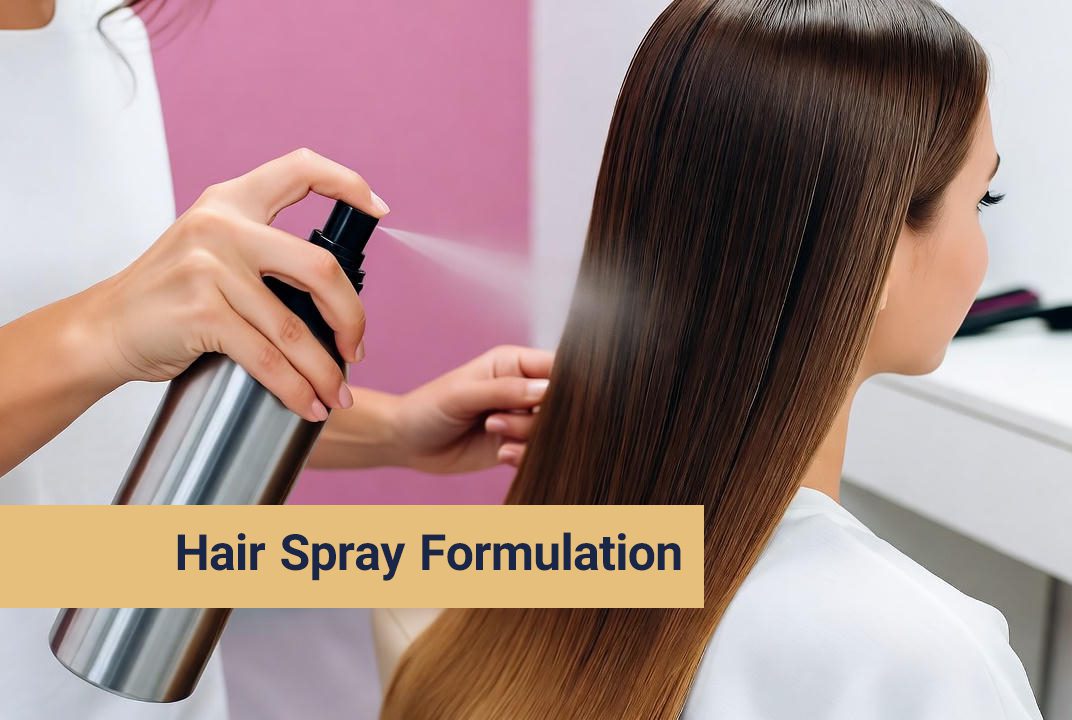
Hair spray, this vital tool in styling and beauty, is more than a simple product; it is a masterpiece of chemical engineering. While the general public focuses only on its final result, namely long-lasting hold and shine, it is the hair spray formulation that primarily determines its quality, safety, and effectiveness.
From the 1940s, when the first generations of this product entered the market, to today, when environmental and health concerns have become priorities, the chemical composition of hair sprays has undergone a major revolution. Modern manufacturers are required to strike a complex balance between strong performance, such as creating texture and controlling frizz, user safety, and compliance with environmental regulations, including the reduction of VOCs.
This article provides a comprehensive and scientific analysis of advanced hair spray formulation. We will examine in detail how fixing polymers (PVP and acrylates) form the foundation of hold, solvents ensure uniform distribution, plasticizers prevent brittleness, and propellants in aerosol types enable optimal spraying. Join us to learn about hair spray formulation.
A Brief Look at the History of Hair Spray
The first hair sprays were developed in the mid-20th century. Early formulations focused mainly on providing strong hold, but they often made the hair stiff and sticky and had limited appeal.
Over time, as hairstyling became more dynamic, hair sprays also evolved. During the 1970s and 1980s, manufacturers introduced more diverse formulations that allowed styles ranging from natural and soft to structured and bold. The use of flexible polymers made the final appearance of the hair look more natural, turning hair spray into an essential tool for professional hairstylists and everyday consumers.
Today, hair sprays are produced in various types, each designed for a specific hair type and different styling needs.
Read more: Applications of Polyquaternium-7 in Hair Care Products: Reducing Hair Frizz and Static Electricity
The Role of Hair Spray in Styling and Hairdressing
Hair spray is one of the most multifunctional products in the world of hair styling and has a variety of applications:
- Hold and Control : Hair spray helps maintain a hairstyle throughout the day and prevents it from becoming disarranged by providing flexible or firm hold.
- Texture Creation: Some sprays add texture to the hair, making styling easier and allowing the creation of styles with greater volume, messy looks, or structured forms. Texturizing sprays are especially popular for styles such as beach waves or messy updos.
- Shine: Many hair sprays contain ingredients that enhance the hair’s natural shine and give it a healthy and glossy appearance.
- Frizz and Split-End Control: By forming a lightweight layer over the hair, hair spray prevents moisture penetration, thereby reducing frizz and creating a smooth and neat appearance.
The versatility of hair spray has made it a popular choice for various occasions, from everyday styling to complex hairstyles for special events.
Hair Spray Formulation: Balancing Performance, Safety, and User Experience
Producing a high-quality hair spray requires achieving a delicate balance between effectiveness and consumer convenience. The product must be able to hold the hairstyle while also being easy to use and safe for both the user and the environment. Key considerations include:
- Performance: Hair spray should provide consistent results, with uniform distribution over the hair and long-lasting hold. It should also provide specific benefits such as reducing frizz or increasing shine without negatively affecting the hairstyle.
- Safety: Modern formulations avoid harsh chemicals that may harm the hair, scalp, or environment. For example, the use of volatile organic compounds (VOCs) in Aerosol Sprays is now restricted to help prevent air pollution.
- User Experience: Hair spray should feel lightweight on the hair, be easy to comb through, and leave no residue or sticky effect. A good hair spray should facilitate the styling process rather than become an obstacle.
Hair spray formulations continue to evolve, driven by consumer demand for better performance, safer ingredients, and environmentally friendly options. This evolution demonstrates the continued importance of hair spray in achieving beautiful and long-lasting hairstyles while addressing modern challenges and preferences.
Read More: Key Principles of Baby Shampoo Formulation: From Mild Surfactants to Balanced pH
Key Ingredients in Hair Spray Formulation
Producing an effective hair spray requires a precise combination of selected raw materials, each of which plays a specific role in performance, safety, and consumer satisfaction. From maintaining the hairstyle to enhancing shine and protecting against humidity, these ingredients work together to provide a reliable and user-friendly product.
1. Fixing Polymers (5 to 20 percent)
Fixing polymers are the main foundation of hair spray formulations. These materials form a thin layer over the hair and help maintain the hairstyle and its structure.
- Examples :
- Polyvinylpyrrolidone :(PVP) A widely used polymer that provides strong hold and flexibility.
- Acrylate Copolymers: They improve hairstyle durability, particularly for styles that require long-lasting hold.
- Role: Fixing polymers form a thin, invisible film on the hair shaft that holds each strand in place. This film helps maintain the hairstyle and allows different levels of hold, from soft and flexible to firm and strong.
2. Solvents (50 to 80 percent)
Solvents are essential for dissolving polymers and ensuring their uniform distribution during spraying. They also affect drying time and the final feel of the product on the hair.
- Examples :
- Water: Used in water-based formulations.
- Ethanol: A common solvent that evaporates quickly and leaves the polymer film on the hair.
- Role: Solvents transfer the active ingredients to the hair and evaporate after application, leaving a uniform coating of fixing polymer on the hair. Due to its fast-drying properties, ethanol is a popular option for quick-drying sprays.
Plasticizers in Hair Spray Formulation (1 to 5 percent)
Plasticizers play a key role in maintaining the flexibility of the polymer film and preventing the hair from becoming dry or brittle.
- Examples:
- Glycerin: A humectant that helps increase hair flexibility and moisture.
- Propylene Glycol: It provides greater softness to the hair and reduces the risk of hair strand breakage.
- Role: By adding flexibility to the polymer film, plasticizers help maintain the hair’s natural feel and healthy appearance. These ingredients are particularly important in high-hold formulations because they prevent cracking or flaking of the film on the hair.
Propellants (10 to 30 percent)
Propellants are used in aerosol sprays for uniform and effective product distribution.
- Examples:
- Hydrofluorocarbons (HFCs): Environmentally compatible propellants that comply with environmental regulations.
- Propane-Butane Compounds: Widely used and highly effective in producing a uniform, mist-like spray.
- Role: Propellants create pressure inside the container and release the formulation as a spray. This process provides uniform hair coverage and consistent, effective results. Propellants play a vital role in creating a lightweight, uniform application without heaviness on the hair.
5. Additives in Hair Spray Formulation (1 to 5 percent)
Additives improve the performance and visual appeal of hair spray and address specific hair styling needs.
- Types of Additives:
- Shine Enhancers: Silicones such as Dimethicone make the hair surface shinier and smoother.
- Humidity-Resistant Agents: They help prevent hair frizz and maintain the hairstyle under humid conditions.
- Conditioning Agents: Ingredients such as Panthenol (provitamin B5) help support hair health and improve softness.
- Role: Additives provide complementary benefits such as reducing frizz, increasing shine, and improving the overall hair texture, thereby enhancing the user experience.
6. Preservatives (0.1 to 1 percent)
Preservatives are essential in hair spray formulations to prevent microbial growth and maintain product safety, particularly in water-based formulations.
- Examples :
- Phenoxyethanol: A widely used preservative with broad antimicrobial activity.
- Potassium Sorbate: Effective against molds and yeasts, helping extend product shelf life.
- Role: Preservatives protect the formulation against contamination and help ensure product safety over time. This is essential for maintaining quality and preventing product spoilage.
To purchase cosmetic and personal care grade Glycerin, Isopropyl Alcohol, and Polyquaternium-7, contact the sales experts at Padideh Shimi Jam.
Sources: